
Different forms of systemic inquiry focused on strengthening how people participate, coordinate, learn, and act together.
Neruj Studio works across different forms of systemic inquiry depending on the nature of the situation, the people involved, and the level of system that needs to be examined.
The work may focus on leadership participation, organizational coordination, or collective learning across groups, institutions, and wider fields of practice.
Across all areas, the aim remains the same: helping people understand more clearly the systems shaping current outcomes and future possibilities.

Leaders are never outside the systems they lead. Their decisions, responses, assumptions, silences, and ways of participating all shape how situations evolve.
Neruj Studio works with leaders to examine real situations where their participation is central to how the system is functioning. As patterns become visible, leaders are better able to act with greater clarity, responsibility, and coherence.
Leaders may enter this work through a recurring challenge, an important transition, or the desire to understand the system they are shaping more clearly.
The work often begins with situations involving escalation, unclear ownership, slow decisions, fragmented coordination, or a sense that current responses may be reinforcing patterns that need to change.
These situations are not treated as isolated problems. They become entry points into the system shaping current and future outcomes.
Visibility: I want to see more clearly what is really driving the situation.
Participation: I may be part of the pattern I am trying to change.
Authority: How I hold authority shapes how responsibility and action move through the system.
Coordination: Work is moving, but not coherently.
Through this structured work, leaders become better able to see the patterns beneath recurring or emerging situations, understand how their participation shapes the system, clarify authority and responsibility, strengthen coordination, and support more coherent collective action.

Most performance challenges do not stem from strategy alone. They arise through how work is actually carried out: how priorities are interpreted, how teams interact, how decisions are made, and how coordination happens in practice.
Neruj Studio works with leadership teams and cross-functional groups to examine the system shaping performance and the dynamics producing outcomes. As these dynamics become visible, teams are better positioned to strengthen how work is understood, coordinated, and executed.
Organizations may enter this work through a recurring challenge, a period of transition, or the desire to understand the system more clearly before taking on important work.
The work often begins with situations involving misalignment, coordination breakdowns, unclear ownership, inconsistent execution, or the need to strengthen how people work together as priorities evolve.
These situations are not treated as isolated problems. They become entry points into the system shaping current and future performance.
Through this structured work, organizations become better able to see the patterns shaping alignment, ownership, coordination, and execution; strengthen shared understanding across teams; clarify how decisions and responsibilities move through the system; and support more coherent performance and action.
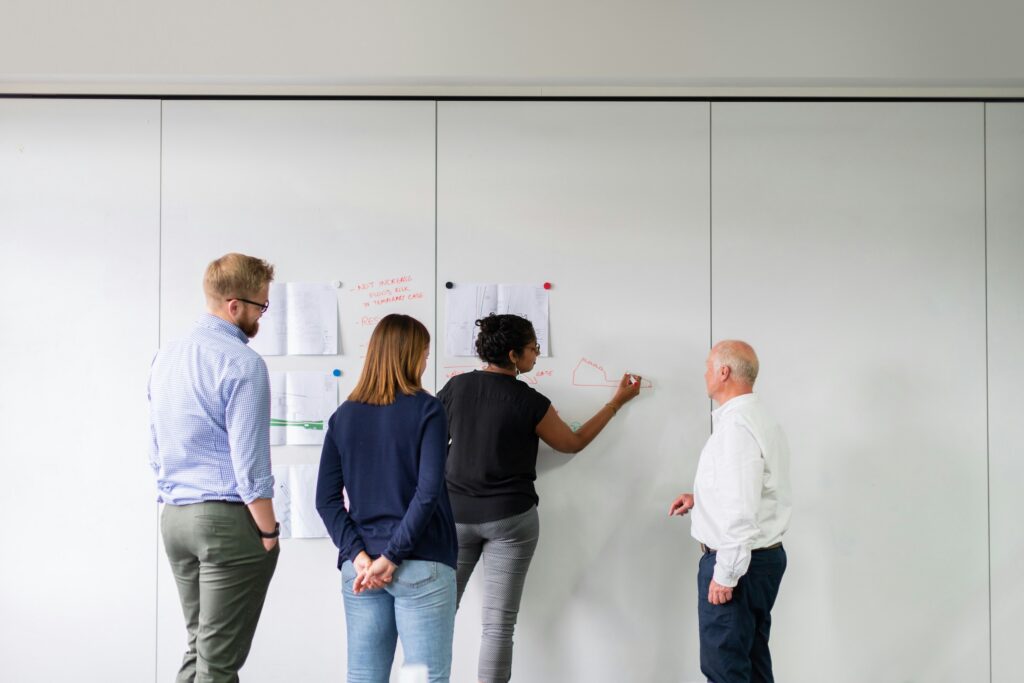
Some forms of learning cannot emerge through instruction alone. They require reflection on live situations, examination of real systems, and sustained inquiry across different perspectives and experiences.
Neruj Studio creates inquiry-based learning environments where leaders, practitioners, students, and groups can examine complex situations together and strengthen how they understand and participate within changing systems.
Collective learning may begin through a course, program, community, professional learning environment, or shared area of practice where people want to deepen understanding and learn through inquiry together.
The work often begins when participants need space to reflect more carefully, examine complexity from multiple perspectives, or strengthen how learning connects to real situations and evolving practice.
These situations become entry points for reflection, shared inquiry, and the development of systemic understanding.
Reflection: People need space to step back and examine what is happening more clearly.
Shared Inquiry: Different perspectives need to be explored together rather than reduced too quickly into agreement.
Systemic Understanding: Participants seek deeper visibility into the patterns shaping current situations.
Collective Learning: Learning develops through ongoing dialogue, reflection, and shared examination of practice.
Through this work, participants strengthen their ability to reflect together, examine live situations systemically, and develop more coherent forms of collective learning and practice across different contexts and communities.
Systemic Inquiry is structured around the situation, the people involved, and the level of system that needs to be examined.
The work may take the form of leadership inquiry, strategic alignment sessions, cross-functional design labs, stakeholder summits, university courses, professional learning programs, communities of practice, or other inquiry spaces.
Formats may stand alone or combine as inquiry expands. What remains consistent is the discipline of helping people examine what is shaping current outcomes and how more coherent participation, coordination, learning, and action can develop to deliver better outcomes and greater impact.
We help you identify where inquiry should begin and shape the work around the situation, the people involved, and the level of system that needs to be examined.