
A distinctive systemic inquiry practice helping leaders, organizations, and learning groups work with greater coherence in complexity.
Important work rarely depends on effort alone. Leaders, organizations, and learning groups often have capable people, shared intentions, and meaningful opportunities ahead of them, yet still struggle to translate them into coordinated action and sustained progress.
By examining the systems shaping present outcomes and future potential, Neruj Studio helps individuals and groups see how current patterns are being produced, how they are participating in them, and where the system can strengthen by building on existing capabilities and successes.
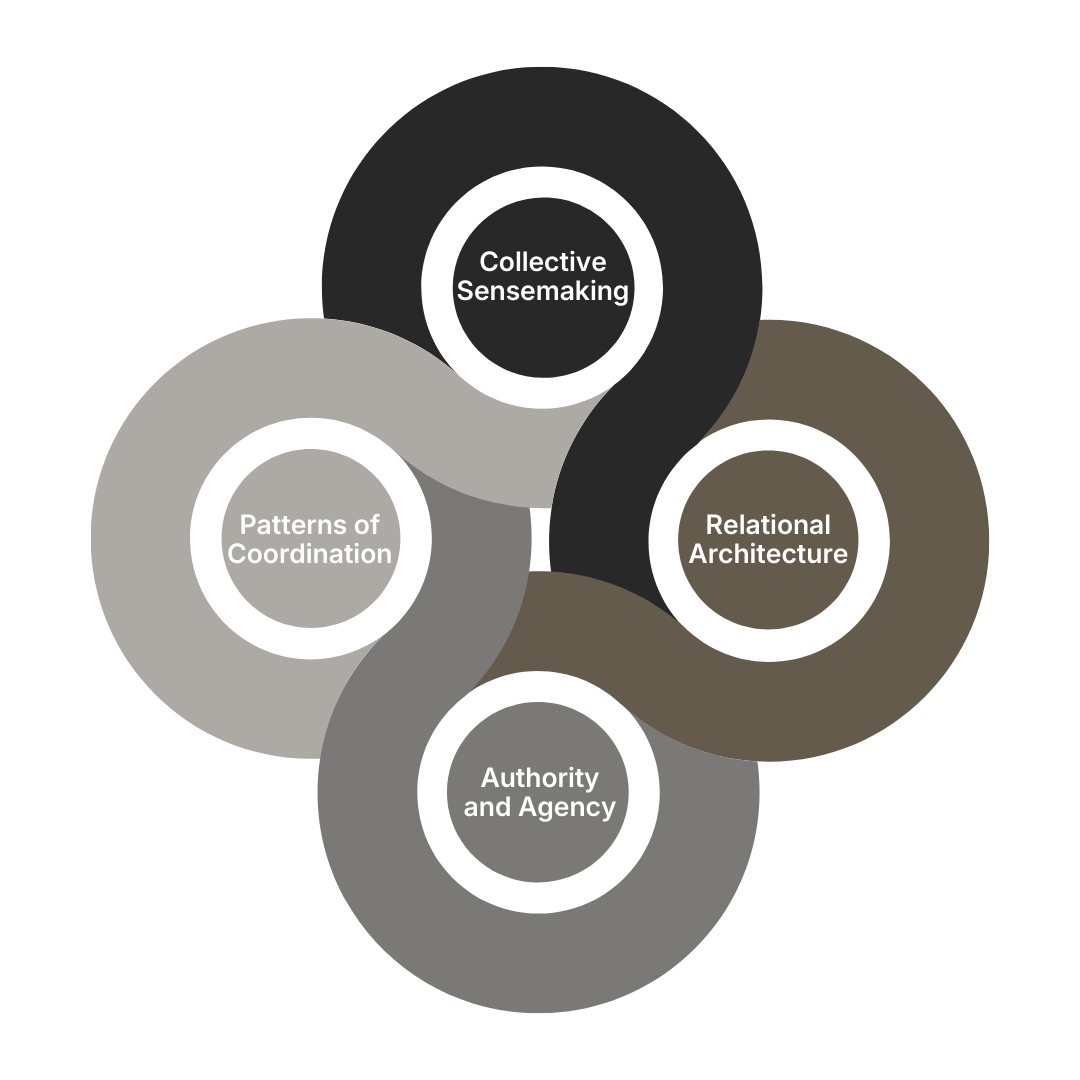
Our work is built around facilitated inquiry, shared conversation, and reflection. We approach organizations, learning environments, and communities as living systems shaped through meaning, relationships, authority, and coordination.
We do not diagnose from the outside or rely on surface fixes. Instead, we work with participants to examine the patterns shaping understanding, relationships, authority, and coordination in practice.
This way of working creates space for participants to slow down, compare perspectives, examine assumptions, and better understand what is shaping the situation before moving toward action.
Our work is guided by the Systemic Inquiry Lens (SIL), which examines how Collective Sensemaking, Relational Architecture, Authority and Agency, and Patterns of Coordination shape outcomes in practice.
Through this lens, participants strengthen the four conditions that support stronger outcomes and impact: Clarity, Coherence, Capability, and Continuity.
Neruj Studio works across different forms of systemic inquiry depending on the nature of the situation, the people involved, and the level of system that needs to be examined.
For leaders examining how their participation shapes real situations, recurring patterns, and future possibilities.
For leadership teams and cross-functional groups seeking stronger alignment, coordination, ownership, and execution.
For inquiry-based learning environments where leaders, practitioners, students, and groups examine live situations and develop systemic understanding together.
As the system becomes more visible, individuals and groups develop greater clarity around what matters, stronger coherence between priorities and action, and greater capacity to coordinate, learn, and respond within complexity. This helps them act with greater intention and sustain more coherent forms of practice.
If you’re looking to strengthen coordination, deepen learning, support more coherent action, or better understand the system shaping current outcomes, we’d be glad to speak.